Operating on 56 hectares of tomato production spread across six locations in the Netherlands, The Valley manages fertigation at scale.
Bryan Riebeek, Crop Specialist at The Valley Growers, keeps track of fertigation performance across different environments and conditions, 7 days per week. Like for many growers, that work traditionally relies on daily checks that require physical presence inside the greenhouse.
“On Sundays, I had to go to the greenhouse twice, to check the watering of the plants.”
These weekend checks require traveling to each of the greenhouse sites, verify the flow rates, andconfirm that each water group was delivering as expected. For Bryan, the goal of installing remote sensors was not to replace the existing fertigation systems. It was to simplify the routine by maintaining the control remotely: without the need to visit the sites.
From a small test to full-scale remote monitoring
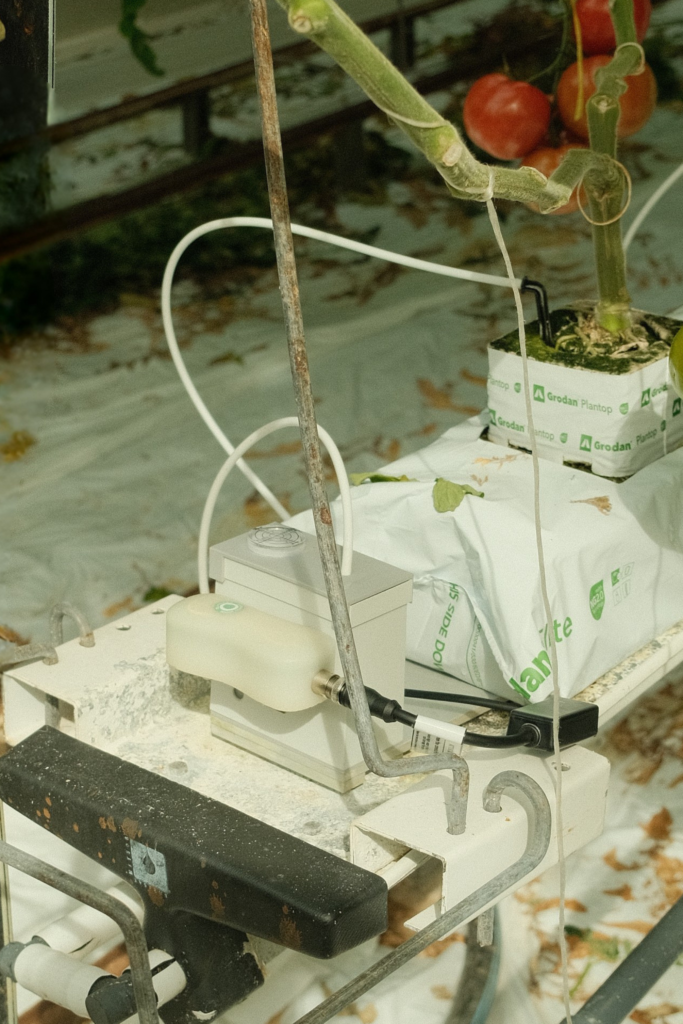
The collaboration with Quantified started with a small-scale test.
“We began with a few sensors around two years ago, first focusing on monitoring fertigation. After a few months we expanded to include monitoring of drainvolume and EC.”
During this testing period, the team found that by monitoring the fertigation remotely, a the traveling time and effort would be greatly reduced, in particular during weekends. Today, Quantified sensors monitor all watering sections in the 8 hectares greenhouse. For every water group the dripper supply and drain volume and EC are monitored.
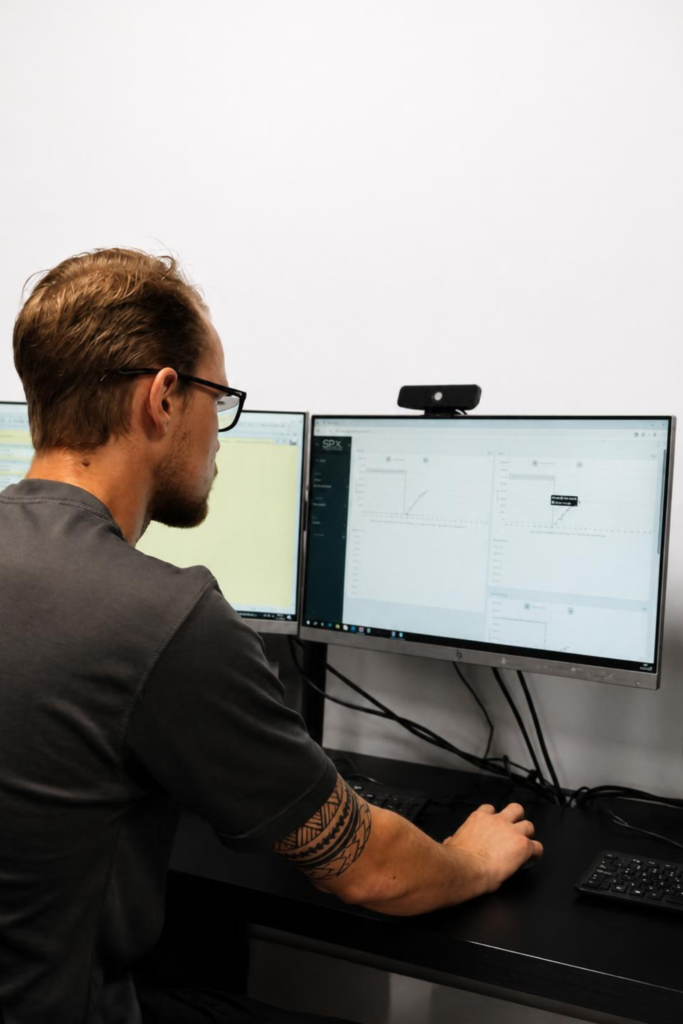
Remote monitoring saves weekends
Before real-time monitoring, fertigation management relied on frequent physical checks, including weekend visits just to confirm everything was running as expected. The amount of information that the grower gathers from such incidental checks is rather limited. Now, the routine looks different.
“I check everything in the morning, and after that I can log in from home on my mobile phone or PC. When I open the Quantified app, I can see the graphs and how much water we have received and used.”
Instead of traveling to the greenhouse multiple times a day, Bryan now follows the performance remotely and steps in only when needed. He now can visit other places during weekends. Furthermore, working with continuous data, viewed as time lines, makes it much easier to detect deviations early. Here the historic data helps: the status of today can be compared and benchmarked to historic trendlines.
The result
For The Valley, Quantified provides a more detailed and continuous insight in fertigation at a reduced daily work load. This means an immediate response and localisation of deviations, less unnecessary travel, and more flexibility, while the the historic data provides valuable insights across locations.
According to Martijn van der Giessen, location manager at South Valley, the operational benefits are also reflected in the economics of the system. “Although the investment was primarily made to reduce the workload on weekends, we also see that the system pays itself back within about 18 months through time savings. This makes the system very attractive.”
When we asked Bryan to describe working with Quantified in two words, he replied: “Great experience.”
Are you also interested in setting up a small-scale test with Quantified’s remote sensors? Contact us at [email protected] to discuss your application!